| living with our favorite old things
Many antique linens are used or displayed similarly to the way they were intended to be used in times gone by: sheets are being used as sheets, tablecloths as tablecloths, towels as towels and curtains as curtains.
No mystery there! But, there are countless other ways in which they can be enjoyed.
why people use antique linens
Some of the best items made today simply can not compare to the phenomenal quality of antique ones.
Not only would the incomparable quality and luxury of handmade antique linens not be remotely affordable today, the raw materials and tools are also inferior, not available or not made to the same degree of fineness.
Items were made by hand by artisans who specialized in their creation. Seamstresses, weavers and embroiderers were trades that produced master craftspeople who produced masterworks.
Antique linens are historically interesting. Women used to grow their own flax crop, harvest it, process it, spin it and weave it into the cloth that their families used. They commemorated events both public (coronations, centennials, world's fairs) and personal (births, marriages, friendships). A bride's trousseau furnished all the household linens that she anticipated using for the rest of her life and sometimes was part of her dowry.
Antique linens are "green." Reuse is a greener practice than buying new and they contain no modern dyes or treatments that are allegens or potentially harmful. Any chemical processes that were used to produce them have dissapated. People with allergies often seek them. Antique linens used pure fibers made without harsh chemicals. (even chlorine bleach is a relative newcomer)
Antique linens connect us to our past and give us a sense of history.
The tradition of "waste not, want not" meant that items were repaired, remade and re-fashioned in order to reuse them. Clothing was remade to acommodate the latest fashions or as "hand-me-downs" for another person. Worn sheets, clothing and tablecloths were cut down to become napkins, pillowcases or towels. Smaller sections became quilt squares, patches and cleaning rags. Nothing was wasted. It's nice to be a part of the lifespan of these lovely and useful old things!
how people use antique linens
Sewing fans use them as "raw material" in upholstery, drapery, clothing, bedding
Restorers use them for study or as replacement pieces for worn items
Lacemakers and lace collectors use them for study, reproduction or display
Museums acquire, preserve, display and teach with their collections
House Museums acquire, preserve and display and teach with their collections
Filmmakers/set decorators (both TV and movies) use them in their sets
Theaters use them in sets and costumes
Doll makers use them as trim and fabric in doll clothing
Historians use them for study, preservation and display
Educators use them for study, preservation and display
Artists use them for study, inspiration, as part of their work or to make paper
Fabric Houses, Fashion Designers reproduce them or their designs
Collectors use them as object of study, to display, to preserve, to cherish or sometimes just to hoard
Decorators recommend them to their clients.
look at linens as fabulous fabrics
Antique linens make wonderful "raw material." Substitute them for new fabric in your projects. Transform them into whatever other things you were planning to make using new material. If sewing is not your forté, you can use or display them without having to sew. Think: glue gun, safety pins, thumb tacks, ribbons and pushpins. Because many antique items are one-of-a-kind, no one else will have anything like it.
lovely transformations
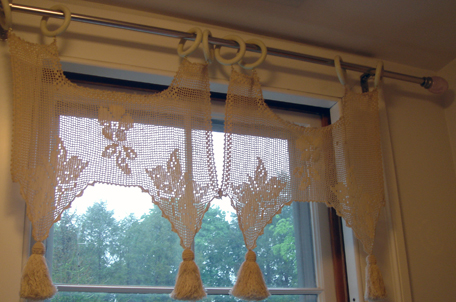
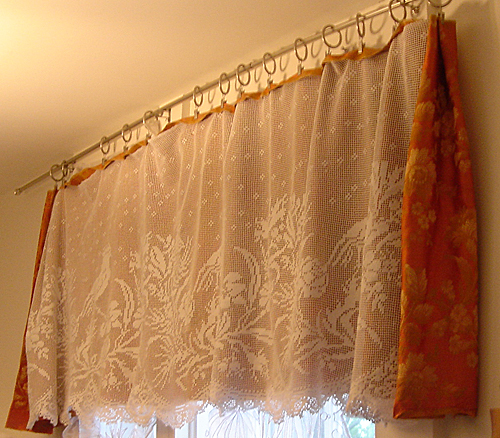
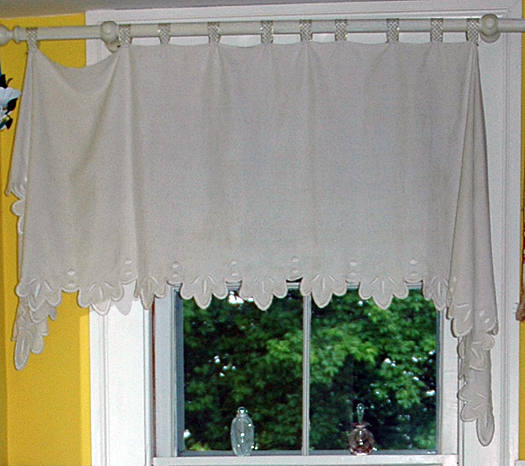
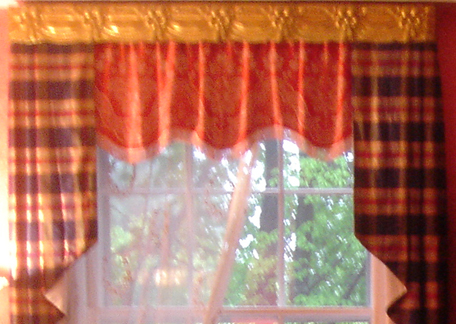
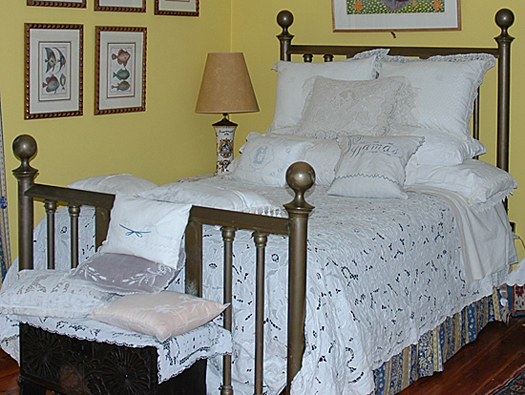
One of the first things that come to mind when I think of other uses for antique and vintage textiles is to use them as window treatments and pillows. Why? Because they are often the right shapes and sizes, sometimes transform with very little work and because I happen to adore window treatments and pillows! And, we all have windows! This is my impulse; feel free to explore your own creative uses!
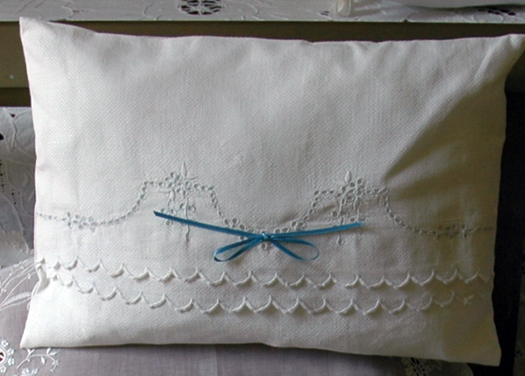
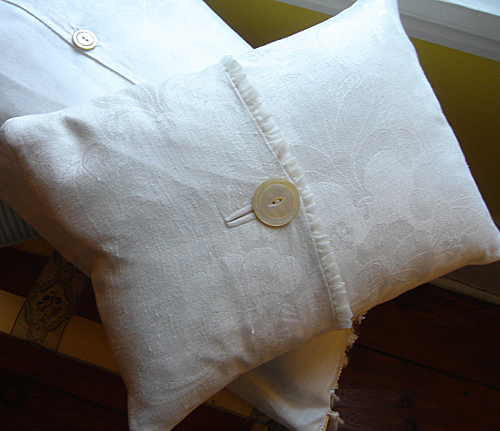
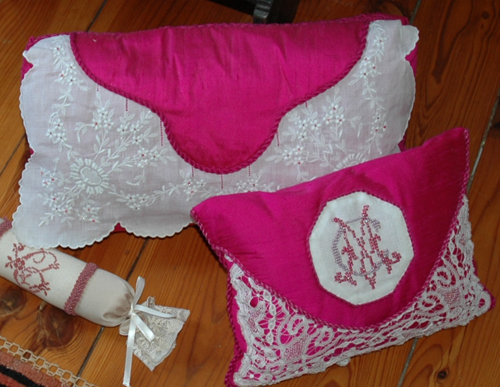
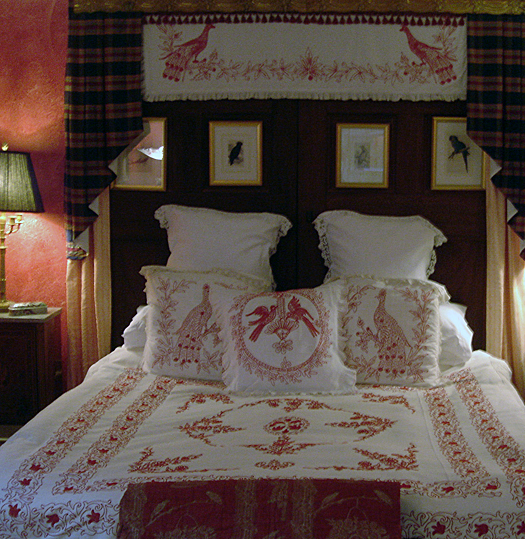
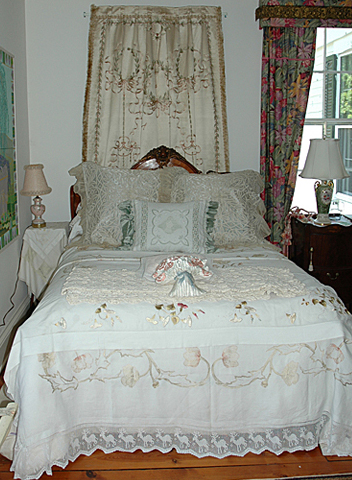
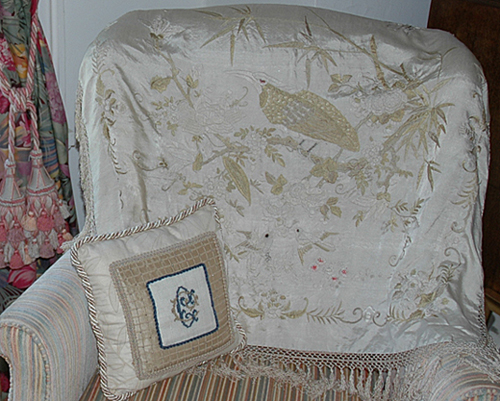
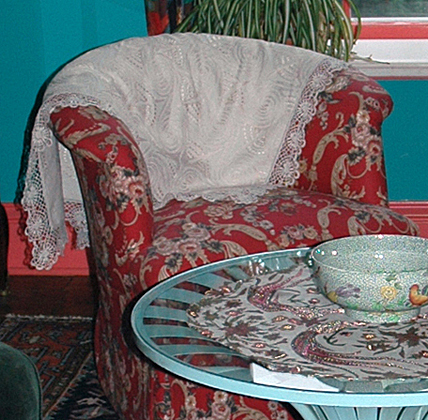
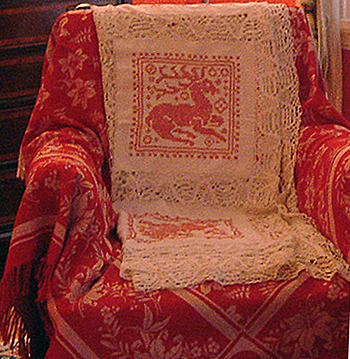
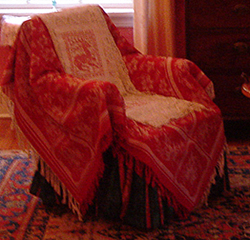
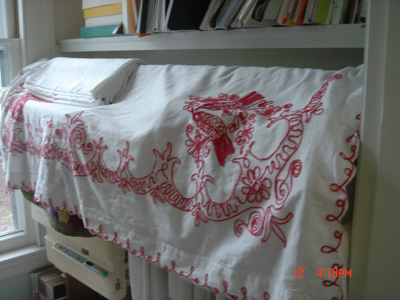
Antique sheets can be used as curtains, bedcovers, throws, hanging displays, screen covers, room dividers, shower curtains or used as upholstery fabric for chairs or headboards or they can be tossed over a table as a tablecloth. Tablecloths can be used as bedcovers or draperies, shower curtains or as fabric, too. Anything that requires a nice big expanse of fabric. Damaged lace tablecloths are particularly good as sheer curtains; not only do they look lacy and pretty, but the flaws can be hidden in the folds. Items that are worn or stained can be cut apart to be made into smaller items: pillows, sachets, lampshades, chair back covers, runners and even clothing.
A particularly inventive way to use a gorgeous antique tablecloth is to cover the "Chuppa", a wedding canopy used during a Jewish wedding ceremony. After the wedding, the tablecloth becomes a memorable keepsake.
An item that used to be common but is not not very popular, is a "layover" style pillow sham. These single layer pieces of fabric were simply placed over the pillows to conceal them. They range in size from one that covers a single pillow to being long enough to span the entire bed. The singles make lovely teacloths, throws, chair backs and simple curtains or shades across a single window. The double layover shams, which can be very long, make wonderful window valances, often without much effort. (with no effort, if you use thumbtacks or pushpins)
Runners also transform easily into shades, cafe curtains, valances and smaller items. Antimacassars, alone or in sets, single or layered, make remarkable valance displays, too.
Some of my customers sew antique handkerchiefs into Christening caps; others have turned a single pillowcase into an interesting embroidered Christening gown. Not to mention one enterprising customer who turned slightly damaged white pillowcases into hanging ghosts for Halloween!
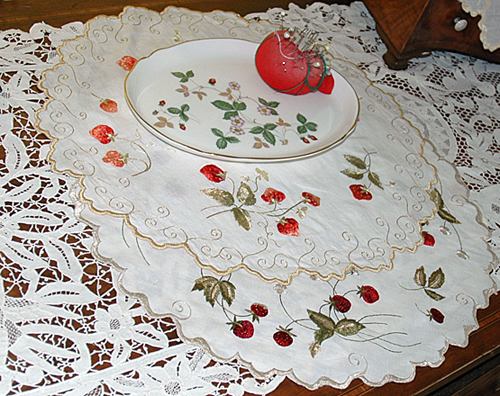
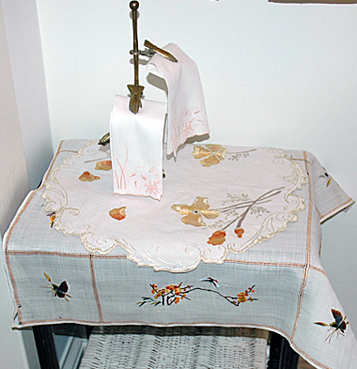
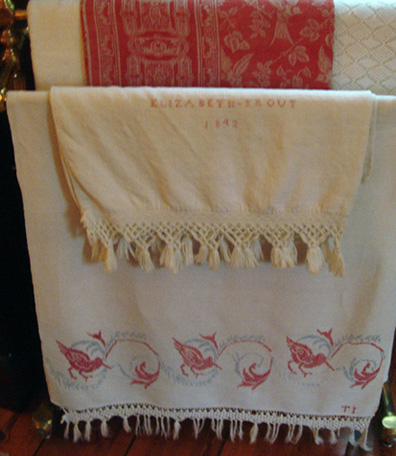
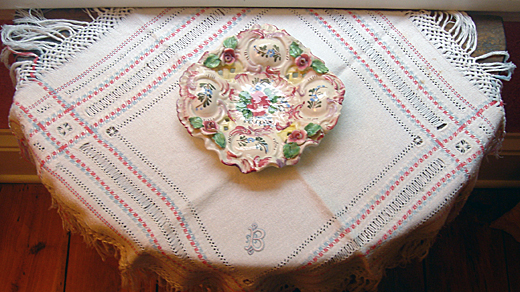
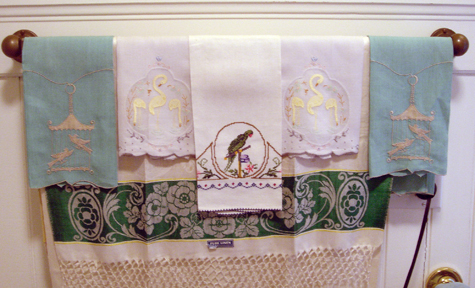
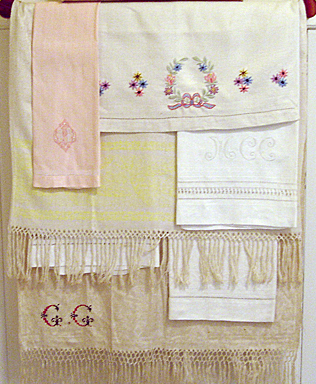
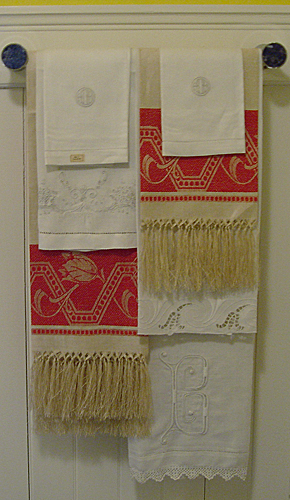
People like to see their collections on display: hankys under glass-topped tables or in sets of shallow drawers; runners draped over doors or tossed over chairbacks.
|

 1998-2020, Cynthia Y. Cooper, Cynthia's Antique Linens.